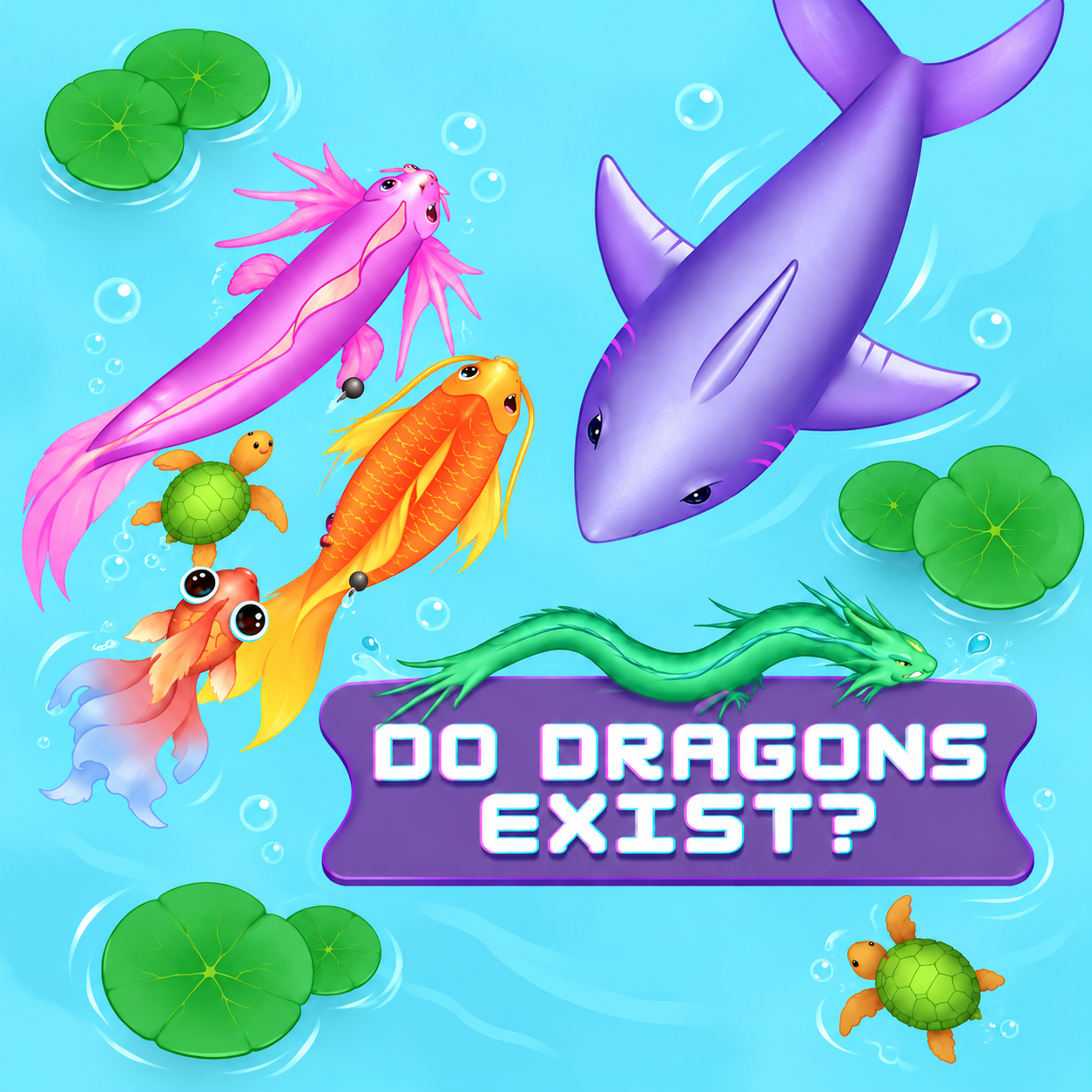
Do Dragons Exist
Do Dragons Exist Mods Game

Goat Rampage

Tower Rise

Horror Nun 2

Sprunki Square Shifted

Obby Survive Parkour

Bees Empire Clicker

Paint Or Hunt

Super Bear Adventure

Brave Squad

Sprunki Hyper Shifted Phase 3 Remastered

Left Or Right Spranki Beats

1 Speed Keyboard Lucky Escape

Traffic Racing

Rider Rush

Sprunki Phase 9 Ggtp

Rooster Road

Please Do Not Feed The Sprunki Brud

Endacopia

Basketball Hit

Flying Car Game Police Games












How To Play Do Dragons Exist
The gameplay centers on guiding a group of small animals through an underwater world. At the very start, the player controls a single tadpole. As the run continues, the group expands and changes by way of evolutionary processes. The most important action is movement: players steer the cluster toward animals that are safe enough to approach and away from larger hunters. The control system is brilliantly simple. With a mouse, the player clicks and holds, then drags to set a new heading. On a touchscreen, pressing and dragging moves the pack. Because the controls require almost no learning, players can turn their full attention toward tactical thinking instead of complicated button sequences.
The heart of the experience is collection and combination. Whenever the pack includes three animals of the same kind, those individuals automatically merge into a bigger, more powerful creature. That merging process is the only road to evolution. Therefore, the player must recognize creatures that match the current members of the pack. Consuming random animals can certainly swell the numbers of the group, but finishing a trio of matching species is what truly accelerates progress. This design pushes the player toward deliberate hunting decisions rather than mindless feeding. The entire experience is grounded in immediate survival, so very different from pondering a question broad as "Do Dragons Exist"—the real challenge is understanding the water’s changing food web from moment to moment. As the pack becomes stronger, the natural hierarchy moves. Creatures that once posed a severe threat may eventually be possible prey, while bigger and more dangerous predators arrive to take their place. This shifting balance means every decision involves breaking down potential threats and opportunities anew.
Survival, however, does not come only from growing larger. Larger animals can swallow the weaker members of the pack, so pursuing just any nearby creature is a risky gamble. The player has to remain in motion, preserve enough open water to flee, and guard pair-of same-type creatures that require a single additional partner to combine. Losing one creature does not bring the run to a halt. The adventure persists until the whole pack has been lost. In that sense, smaller animals can act as a shield or a sacrifice, but losing too many of them severely slows evolution. The game ultimately sits on a balance between aggression and caution. The player must decide when to commit to the chase and when to break off and keep the group safe. Well-crafted joy emerges from those ruthless constant readings of risk.
Do Dragons Exist Wiki
Do Dragons Exist: A Thorough Overview
Synopsis
Do Dragons Exist is an animal progression title created by HolaStudio that drops players into a watery habitat where survival and evolutionary adaptation go hand in hand. Beginning as a modest larval creature, users must navigate a food web in which every organism serves as both a possible meal and a potential threat. The primary goal is to move up the biological ladder by gathering animals, fusing identical kinds, and eventually being able to bring forth a mighty dragon. The experience blends continuous motion, risk evaluation, and step-by-step development. This is not an intense action release but rather a deliberate survival simulation where endurance and close observation play central roles. Its core rule is straightforward: consume or be consumed, yet successful play demands prudent choices at every turn. The title's charm comes from its user-friendly mechanics and the gratifying sense of achievement gained when transforming from a feeble larva to a top-tier hunter. It is aimed at people who enjoy animal-based progression games and want a direct yet compelling challenge.
Key Attributes
The software brings to the table several different elements that set it apart inside the animal-evolution category.
To start with, the advancement system is clear-cut yet deeply fulfilling. The guideline that three matched organisms combine into a more powerful species is effortless to comprehend, yet it generates genuine tactical complexity. Participants must keep track of which types they already own and which are missing. This pushes deliberate movement and gives each encounter a sense of purpose.
Then, the predator–prey system is in a state of flux. This environment is never fixed. As the player's collection advances, the power balance continually changes. Earlier threats become consumable targets, while fresh perils appear. This ongoing shifting keeps each session interesting and forces the player to stay adaptive. The feeling of development is concrete: a former danger can in due course turn into nothing more than sustenance.
Next, the group control mechanism introduces an element of strategic risk. Since the action continues until the whole collection is eliminated, the loss of a single component is not instantly lethal. This allows carefully chosen sacrifices. This player can deploy smaller followers as shields while defending more precious creatures. However, leaning on such tactics repeatedly can stall evolution altogether. This produces tension between immediate survival and the bigger picture of long-term growth.
Also, the operating mechanics are straightforward and easy to use. The swipe-to-steer approach performs effectively on both laptops and hand-held devices. The absence of complex command sequences makes the title easy to learn, yet the strategic aspects keep it absorbing. That accessibility counts as a major advantage, because it allows players to zero in on the evolution process rather than being bogged down by control issues.
Another strong point is the visual and thematic design, which remains consistent and uncluttered. The underwater location perfectly fits the origin point for a small aquatic creature, and the shift to a dragon emerges in an organic way within the title's rules. The animal renderings are sufficiently clear to let users easily distinguish the species and their associated threat levels.
Finally, the title has a deeply rewarding cycle: investigate, collect, combine, survive, and advance. Each completed run provides a fresh chance to improve your approach. The mix of continuous action and incremental development forms a mesmerizing experience for those who appreciate growth-centric gameplay.
Important Advice and Thoughtful Tips
To through succeed in Do Dragons Exist, players need to adopt a calculated mindset rather than blindly chase the first moving object they see.
-
Always put matching first. The quickest route forward is to finish sets of three identical beings. Scooping up random animals might temporarily enlarge the pack's numbers, but it accomplishes nothing toward real progression. Before heading toward an object of interest, see whether it corresponds with any current member. If there is no match, think hard about whether the risk is justified.
-
Refrain from risking everything. Stronger predators are able to consume pack members, and lost creatures hinder progress. It is often the wiser move to let a dangerous target escape than to sacrifice a high-rated companion. In this game, staying calm is an actual advantage. Look over safe windows and act only when the conditions are firmly in your favor.
-
Never lose your escape route. Try to keep a steady distance from predators to grant the possibility to quickly back away. If your group becomes boxed in, the danger of losing several members at once increases. Always be conscious of the nearest line of withdraw of retreat. Moving constantly also helps to avoid being stuck in a corner.
-
Protect near-perfect pairs. Whenever you hold a couple of identical creatures that are literally one animal away from merging, take extra care with them. They are extraordinarily valuable. Do not risk them in dangerous situations. Their survival is vital to your evolution line. Throwing away the pair for a minor gain is never worthwhile.
-
Finesse the use of weaker members. As the game ends when every member is eaten, smaller ones can serve as a form of shield. They may be taken by predators first, giving you time to retreat with your more substantial creatures. Yet, relying too heavily on that strategy will whittle down the group and delay evolution. Use this tactic sparingly.
-
Read the environment after each step up. Because the creature hierarchy changes along with your pack, you must always reassess the landscape after progressing. That animal that used to be a predator may now be easy prey, while larger and more dangerous threats may show up without warning. Stay observant and continuously update your map of safe and risky areas.
-
Gain full control over the steering method. The drag-to-move interface is simple to use, but that directness doesn't mean it's unnecessary to be precise. Rapid and careless actions may lead the group straight into danger. Practice directing the group with steady and deliberate gestures. On touchscreen displays, take extra care to avoid hiding the creatures with your hand.
-
Don't pursue every creature you see. This title rewards calculated selection. Pushing a target toward a risky zone might result in losses that exceed any possible gain. If the path if not good, abandon it. There will always be another same breed nearby later on.
-
Stay in constant motion. When you sit motionless, you become an easy target. Constant locomotion not only helps to dodge attacks, but also lets you identify matching species on the field. Treat movement as a resource that serves the double goals of safety and discovery.
-
Be patient. The transition from larva to dragon does not happen in a flash. Do not expect to reach the final shape within a few minutes. Instead, concentrate on small, steady gains, and learn from each new game. This file is as much about strategy as it is about quick reflexes. Through careful planning and disciplined play, the path from a young creature to the legendary dragon opens up.
In summary, Do Dragons Exist is a cleverly crafted evolution game that gives strong rewards for strategic thinking and cautious risk management. By grasping the merge mechanic, respecting the balance of users, and handling the collection with care, you can guide your creatures to new heights. The game welcomes novices, but has enough meaningful depth to keep veterans invested. Approach every run with a relaxed and methodical attitude, and the great dragon will eventually be within reach. Remember the title of the game itself – Do Dragons Exist – but inside this virtual realm, the answer is yes. You'll finally discover the truth have it.
Do Dragons Exist Frequently Asked Questions
Q: Does Dragons Truly Exist?
A: Do Dragons Exist is a creature-evolution game developed by HolaStudio.
Q: How does the early portion of Do Dragons Exist begin?
A: At the start, you assume the role of a small tadpole and must survive long enough to progress up the food chain.
Q: What is the central objective within Do Dragons Exist?
A: The main goal is to persist in evolving your pack until it eventually produces a powerful dragon.
Q: How does the evolutionary process function in this game?
A: When your pack contains three creatures that are exactly the same, they fuse automatically into a larger, more powerful species.
Q: What approach leads to the quickest evolution?
A: The fastest route is to complete triplets of identical animals. Collecting random creatures can increase your pack counts, but this method does not accelerate evolution as efficiently.
Q: How should you react to the presence of larger predators?
A: Given that bigger animals can consume members of your pack, it is crucial to remain in motion, retain ample distance to flee, and shield any pairs that lack just one more matching creature.
Q: Does the game end if you lose a single animal?
A: No. The playthrough continues until your entire pack has been eaten.
Q: Do smaller companions offer any advantages?
A: Yes, they can provide short-term protection, but sacrificing too many will slow your evolutionary progress.
Q: Can animals that once represented threats later become viable prey?
A: Certainly. Once your pack has grown stronger, creatures that were previously dangerous can shift into possible targets.
Q: What are the mouse controls in Do Dragons Exist?
A: Click and hold the mouse button, then drag to choose the direction you want to travel.
Q: What are the touch controls in Do Dragons Exist?
A: Place your finger on the display and drag to direct the movement of your pack.
Q: In what environment does the game happen?
A: You explore a watery habitat, where you swim through zones and collect animals that are safe to get close to.